
Estimated reading time: 15 minutes
Behind the famous tombs of the Valley of the Kings, beyond the painted corridors and royal burial chambers, there was another world almost hidden in the desert. It was not built for a pharaoh. It was not covered in gold. It was a village of mud-brick houses, narrow streets, tools, letters, food rations, family disputes, prayers, and working lives. Its name today is Deir el-Medina.
This village changes the way we see ancient Egypt. The royal tombs show us how kings wanted to be remembered, but Deir el-Medina shows us the people who made that memory possible. These were the skilled artisans, draughtsmen, stonecutters, scribes, and workers who carved and decorated some of the most extraordinary tombs in Egyptian history. If Before Sunrise followed an ordinary Egyptian day, and The House Beside the Nile opened the door to domestic life, this hidden village brings those themes into one of the richest archaeological communities ever found.
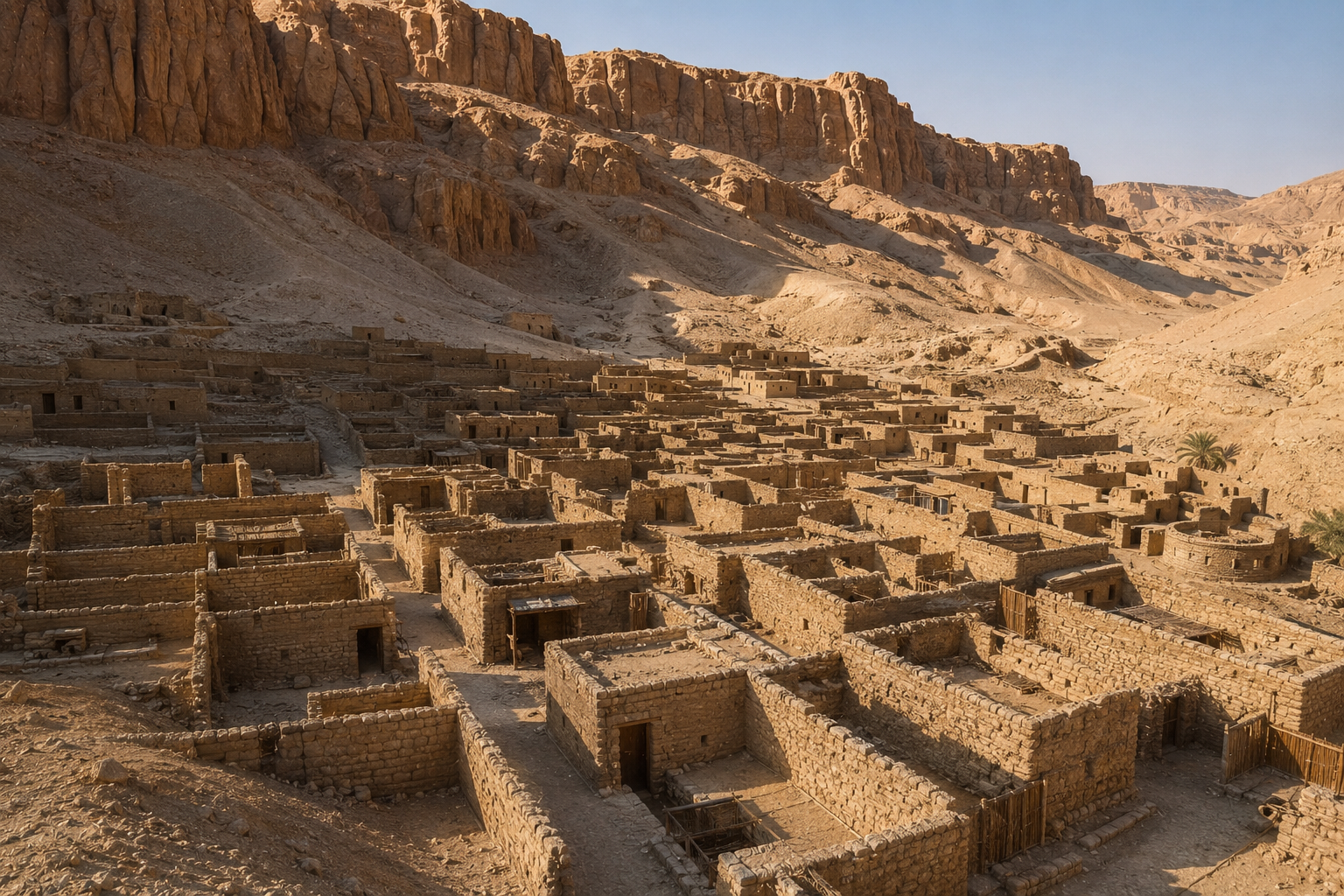
Deir el-Medina was a planned village on the west bank of Thebes, near modern Luxor. It housed the workers and families connected with the royal tombs of the New Kingdom. Because the site preserved homes, tools, letters, ostraca, chapels, tombs, and administrative records, it gives archaeologists an unusually detailed view of daily life in ancient Egypt.
- A Village Hidden in the Desert
- Why Deir el-Medina Was Built
- A Village Built for Royal Craftsmen
- Inside the Family Home
- Walking to the Valley of the Kings
- Inside the Royal Workshops
- Letters Written on Stone
- Life Beyond Work
- Wages, Food, and the First Recorded Strike
- Why Archaeologists Treasure Deir el-Medina
- Final Thoughts
- Frequently Asked Questions
A Village Hidden in the Desert
Deir el-Medina does not announce itself like a pyramid. It does not rise above the horizon as a single giant shape. It sits closer to the earth, pressed into the dry landscape of western Thebes, surrounded by desert hills and archaeological silence. Yet this modest village may reveal more about real ancient Egyptian life than many larger monuments.
To understand its importance, imagine walking through the remains of a settlement where the houses still outline the lives of people who were not kings. The streets are narrow. The homes are compact. The landscape is harsh. The Nile Valley lies beyond the desert edge, but the village itself belonged to the world of tombs, cliffs, and royal secrecy.
This was not an accidental settlement. It was a community built for a purpose. The people who lived here were close to the sacred and political center of royal burial. Their work demanded skill, trust, organization, and secrecy. They were not anonymous laborers dragging stones for a distant king. They were specialized workers connected to some of the most sensitive projects of the New Kingdom.
That is what makes Deir el-Medina so powerful. It stands between two worlds: the official world of pharaohs and the private world of households. In one direction lay royal tombs. In the other lay village life, with its kitchens, children, arguments, lamps, prayers, and ordinary routines.
Why Deir el-Medina Was Built
The royal tombs of the Valley of the Kings were not simple holes in the rock. They were carefully planned monuments filled with religious texts, carved chambers, painted walls, symbolic passages, and architectural decisions designed to protect and glorify the dead king. Creating such tombs required a permanent workforce of skilled people.
Deir el-Medina was built to house that workforce. Its ancient name, often translated as the “Place of Truth,” reflects its connection to the sacred work of royal burial. The men associated with the tombs could be described as servants in that place, tied to a duty that was practical, artistic, and religious at the same time.
Unlike a normal farming village, Deir el-Medina existed because of state planning. Its residents were supplied through official systems. Their work was organized. Their time was recorded. Their movements, absences, payments, and disputes could enter written records. This makes the village exceptional for historians because it left behind both architecture and paperwork.
The village was also somewhat isolated. Its position near the Theban necropolis helped keep the tomb-building community close to its work while separating it from the main river settlements. That separation was not only geographical. It gave the community a distinct identity.
Deir el-Medina matters because it allows us to study ancient Egypt from below the royal level. The village connects archaeology, writing, labor history, domestic life, religion, and art in one place.
A Village Built for Royal Craftsmen
The village itself was carefully arranged. Archaeological remains show rows of mud-brick houses, narrow streets, and a settlement plan that reflects organization rather than random growth. This was a community shaped by work, administration, and daily necessity.
The homes were not palaces, but they were not meaningless ruins either. Their walls, rooms, thresholds, stairways, and storage areas reveal how families lived. Like the houses discussed in The House Beside the Nile, these domestic spaces combined shelter, cooking, storage, rest, and household activity.
The village layout also reminds us that ancient Egyptian workers were not living in temporary camps without identity. They had families, possessions, religious practices, local relationships, and personal concerns. They lived in a community that could remember names, settle disputes, exchange goods, and pass skills from one generation to another.
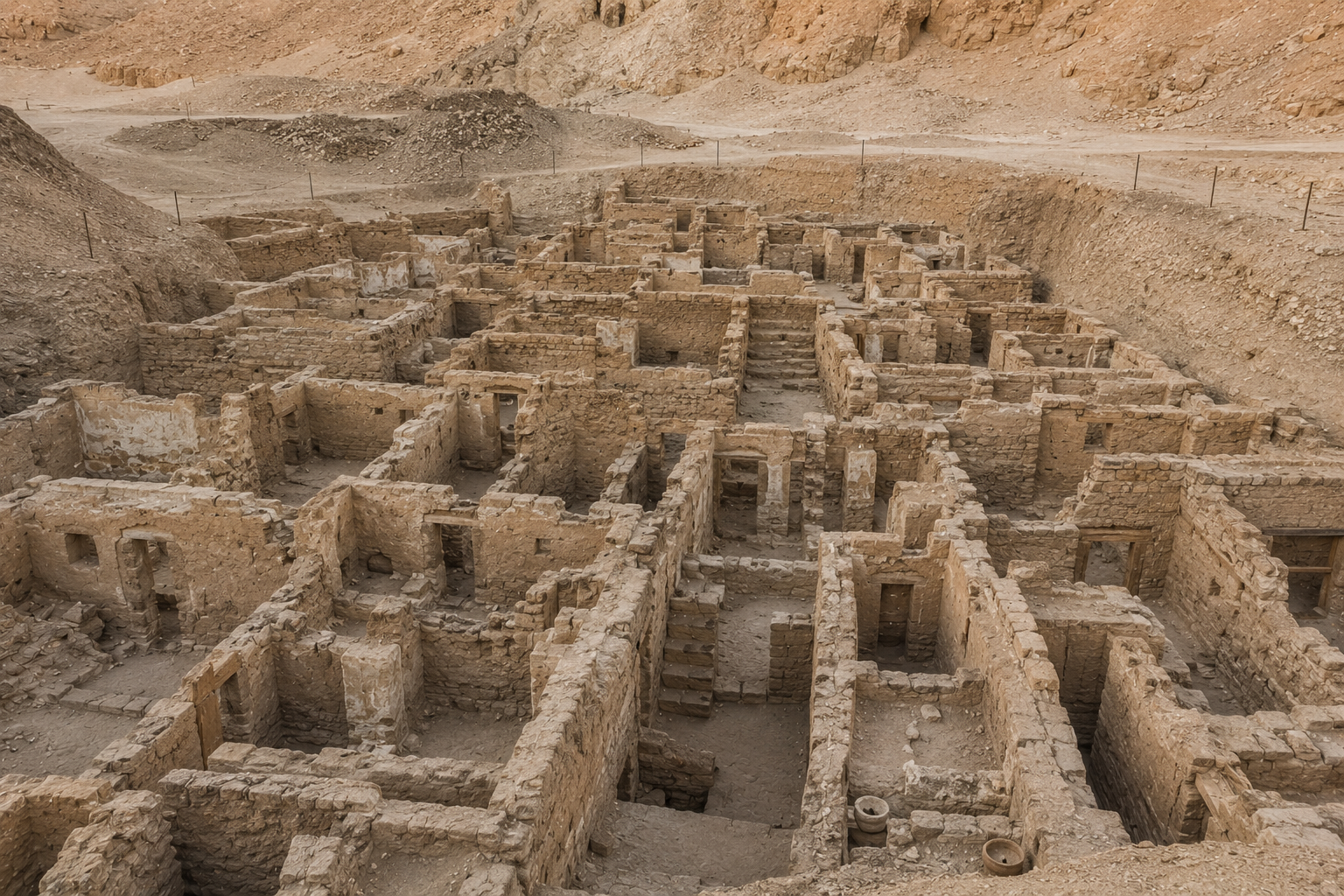
What survives today may look quiet, but in its own time the village would have been full of sound. Doors opening. Tools being carried. Food being prepared. Children moving through courtyards. Scribes writing notes. Workers leaving for the tombs. Families waiting for rations. Neighbors speaking across narrow spaces.
Deir el-Medina was not merely the village behind the tombs. It was a living machine of skill, family, and memory.
| Feature | What It Reveals | Why It Matters |
|---|---|---|
| Mud-brick houses | Domestic architecture, room use, family organization | Shows how specialized workers lived outside royal monuments |
| Ostraca | Letters, records, drawings, lists, exercises | Preserves informal voices rarely found in elite inscriptions |
| Tools and workshops | Craft production, painting, carving, tomb decoration | Connects village life to royal tomb construction |
| Ration records | Payment systems, supply problems, worker dependence | Explains the economic life behind royal projects |
| Local chapels and tombs | Personal religion and community identity | Shows that workers had their own spiritual world |
Inside the Family Home
To enter a Deir el-Medina house is to step away from the grandeur of the royal tomb and into the world that made it possible. The home was smaller, warmer, more crowded, and more human than the painted corridors of the valley. It was where workers returned after long periods of labor, where women managed domestic life, where children learned their place in the village, and where food supplies had to be protected.
Houses in the village were built mainly of mud brick, like many ordinary Egyptian homes. They contained several functional spaces: entrance areas, main rooms, smaller rooms, kitchens or cooking spaces, storage zones, and often access to the roof. These were practical environments, designed around heat, food, work, rest, and family needs.
The house was not simply a private retreat. It was part of the village economy. Food was prepared there, textiles may have been worked there, children learned there, and family concerns were discussed there. When we read texts from the village about deliveries, absences, disputes, or payments, we should imagine those records returning to real houses filled with real consequences.
Meals would have connected this village to the wider food world of ancient Egypt. Bread and beer remained central, as explained in Bread and Dust. For the workers of Deir el-Medina, rations were not abstract accounting. They were household survival.
The village was therefore both privileged and vulnerable. Its workers were skilled and state-supported, but their families still depended on supplies arriving on time. When that system failed, daily life could become tense very quickly.
Walking to the Valley of the Kings
Each workday connected the village to the Valley of the Kings. The men who labored on royal tombs did not simply step into a nearby room. They moved through a demanding desert landscape to reach the place where kings were prepared for eternity.
This journey carried symbolic weight. The workers left homes built for the living and entered spaces created for the dead. They moved from village dust into royal darkness, from household concerns into sacred decoration. Few communities in ancient history lived so closely between ordinary family life and the artistic construction of the afterlife.
The work itself required discipline. Tomb walls had to be shaped, smoothed, drawn, carved, painted, and corrected. Religious texts had to be copied accurately. Images had to follow established conventions. Mistakes could carry artistic, administrative, and religious consequences.
This was not casual labor. It required training, coordination, and trust. The men of Deir el-Medina were part of a highly specialized workforce whose skill can still be seen today on the walls of royal tombs.
Yet after this work, they returned to the village. They went back to homes, meals, children, lamps, and evening routines like those explored in The Last Lamp at Dusk. The same person who helped decorate a king’s eternal home might later sit in a mud-brick house discussing grain, tools, or family problems.
Inside the Royal Workshops
The artisans of Deir el-Medina worked within one of the most demanding artistic traditions in the ancient world. Their task was not simply to decorate walls. They had to translate royal theology into image, line, color, and stone. Every scene inside a royal tomb belonged to a larger religious program.
Different specialists contributed to this work. Draughtsmen prepared outlines. Stonecutters and carvers shaped surfaces. Painters applied color. Scribes and administrators tracked progress. Foremen supervised teams. The work required cooperation across skill levels and generations.
Royal tomb decoration may look effortless when viewed today, but it depended on training. Young workers likely learned by watching experienced craftsmen, correcting small tasks, and gradually gaining responsibility. The same principle appeared in ordinary childhood, as discussed in Born Beside the River: learning often began through observation before formal mastery.
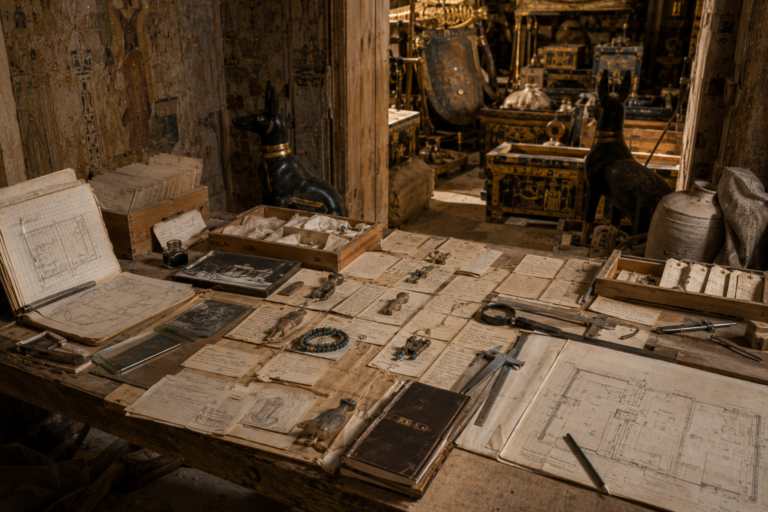
The workshop world also produced objects beyond royal tomb walls. Sketches, practice drawings, unfinished designs, and ostraca reveal the working process behind finished art. These pieces are invaluable because they show not only what Egyptians created, but how they practiced.
Letters Written on Stone
One of the greatest archaeological treasures of Deir el-Medina is not made of gold, painted plaster, or carved granite. It is made of broken pieces of limestone and fragments of pottery. These simple objects, known today as ostraca, transformed historians’ understanding of ordinary life in ancient Egypt.
Unlike formal inscriptions carved for eternity, ostraca were everyday writing surfaces. They were inexpensive, readily available, and practical. Scribes and workers used them to write letters, record deliveries, copy school exercises, sketch figures, calculate supplies, report absences, settle disputes, and even practice artistic designs.
Because thousands of these fragments survived, Deir el-Medina speaks with an unusually human voice. Instead of hearing only kings, we hear craftsmen asking for supplies, officials recording attendance, neighbors exchanging messages, and families dealing with ordinary concerns. The result is one of the richest collections of everyday written evidence from the ancient world.
Many of these texts reveal that literacy within the village was higher than historians once expected. Not everyone could read and write, but scribes formed an essential part of the community, and written communication became woven into daily administration.
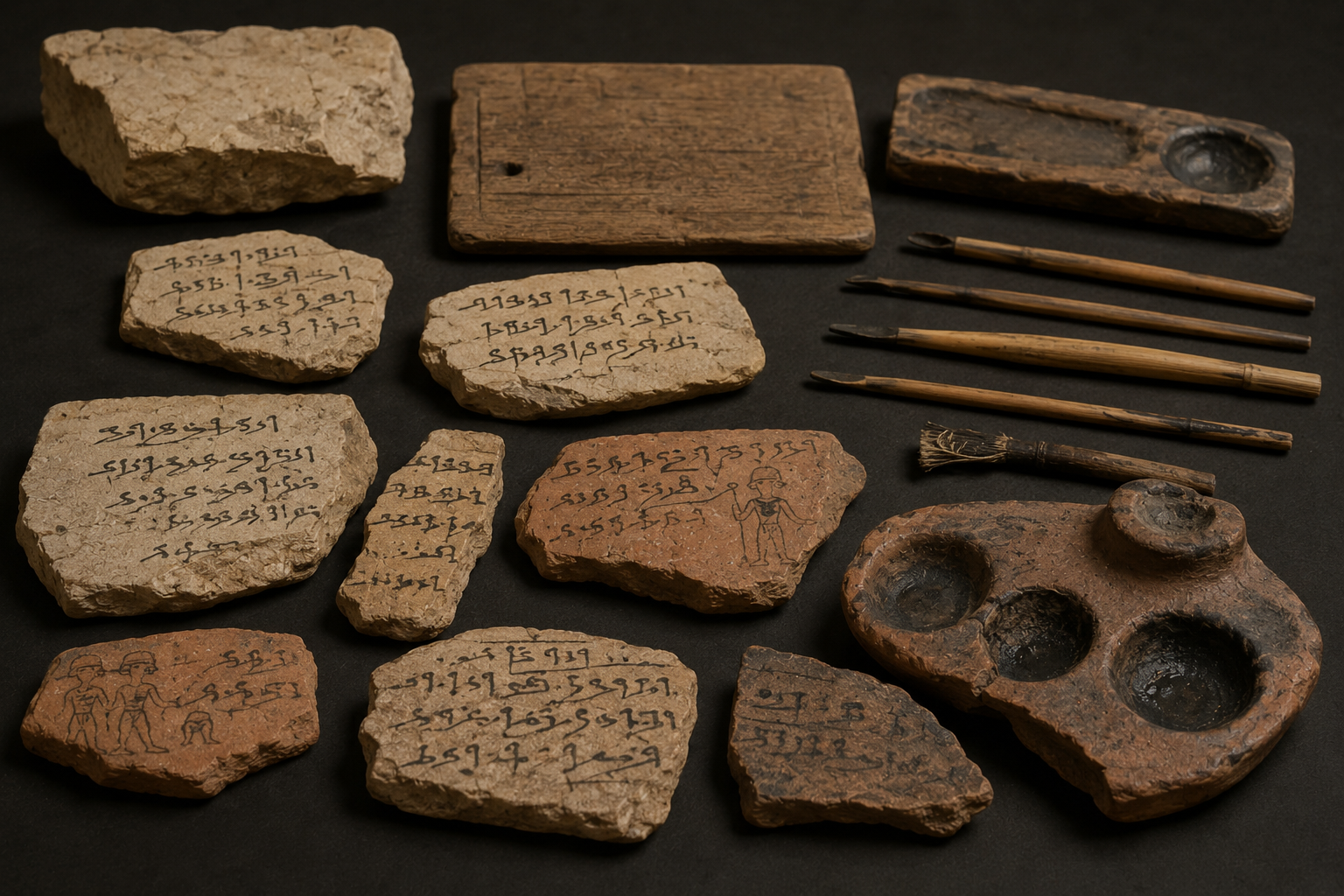
These writings also remind us that ancient Egypt was a society of administration as much as monument building. Behind every decorated royal tomb stood records, inventories, attendance lists, supply accounts, and written decisions. Deir el-Medina preserves that invisible bureaucracy in remarkable detail.
Life Beyond Work
Although the village existed because of royal tomb construction, work did not define every moment of life. Families still celebrated festivals, raised children, repaired homes, visited local chapels, exchanged gifts, and maintained relationships with neighbors.
Children grew up surrounded by skilled artisans, watching fathers, brothers, and relatives leave each morning before returning at dusk. Much like the childhood described in Born Beside the River, learning often began through observation. A young person could absorb artistic techniques, practical habits, and community traditions simply by living inside the village.
Evenings returned the workers to ordinary domestic life. Oil lamps illuminated homes, conversations replaced hammer blows, and the settlement settled into the quieter rhythm explored in The Last Lamp at Dusk. Royal projects paused until another sunrise, but village life continued.
Religion also remained deeply personal. Small household shrines, local chapels, private prayers, and family beliefs complemented the great temples of Egypt. Archaeology shows that ordinary Egyptians practiced religion within their own community as well as through state ceremonies.
This balance between extraordinary work and ordinary life is what makes Deir el-Medina unique. The people who decorated the burial places of kings still worried about family, illness, neighbors, food, payments, and the countless concerns shared by communities everywhere.
| Aspect of Village Life | Archaeological Evidence | What It Reveals |
|---|---|---|
| Family life | Homes, furniture, domestic objects | Daily routines and household organization |
| Education | Writing exercises and ostraca | Training of scribes and literacy within the village |
| Religion | Chapels, shrines, votive objects | Personal religious practice alongside state religion |
| Community | Letters and administrative records | Neighbor relationships, disputes, and cooperation |
| Craftsmanship | Tools, sketches, unfinished work | Exceptional artistic specialization |
Wages, Food, and the First Recorded Strike
Perhaps the most famous story associated with Deir el-Medina is not artistic at all. It is economic. The workers were normally paid through state rations rather than modern wages. Bread, beer, grain, vegetables, and other supplies supported both the craftsmen and their families.
As long as these deliveries arrived, the system functioned. But toward the end of the New Kingdom, delays became increasingly serious. Workers who depended upon official provisions suddenly found themselves unable to support their households.
The response was extraordinary.
Rather than quietly continuing to work, the craftsmen stopped. Historical documents record what is widely regarded as the earliest known labor strike in recorded history, taking place during the reign of Ramesses III. The workers protested because promised food rations had not been delivered.
This event is remarkable because it feels surprisingly modern. The surviving records describe negotiation, complaints, delayed payments, and organized action. Instead of anonymous laborers, we encounter individuals aware of both their importance and their rights within the administrative system.
The strike also reminds us that magnificent monuments depended on ordinary people. Without reliable food, even the builders of royal eternity could not continue their work.
It is impossible to separate this story from the ordinary meals discussed in Bread and Dust. Bread was more than food. For these workers, it represented security, payment, and the survival of entire families.
Why Archaeologists Treasure Deir el-Medina
Many archaeological sites preserve architecture. Others preserve inscriptions. Some preserve royal objects. Deir el-Medina preserves almost everything needed to reconstruct an ancient community.
Its houses reveal domestic life. Its workshops explain artistic production. Its ostraca preserve conversations. Its tombs illuminate personal beliefs. Its administrative records reveal economics. Together, these discoveries create one of the most complete portraits of an ancient working community anywhere in the world.
Few places allow researchers to follow the same people from their homes to their workplaces, from official records to personal letters, and from everyday concerns to royal projects. This continuity makes Deir el-Medina invaluable not only for Egyptology but for the study of ancient societies more broadly.
It also changes the questions we ask about ancient Egypt. Instead of asking only how pyramids or tombs were built, we begin asking who built them, how those people lived, what they ate, where they slept, what they worried about, and what they wrote when they believed no king was listening.
In many ways, Deir el-Medina represents the hidden Egypt promised by this category. It reminds us that some of the greatest archaeological discoveries are not spectacular treasures, but ordinary lives preserved with extraordinary clarity.
Deir el-Medina is more than an archaeological site. It is one of the rare places where ancient Egypt speaks with the voices of ordinary people. Behind every painted royal tomb stood craftsmen who returned each evening to modest mud-brick homes, shared meals with their families, worried about supplies, taught their children, wrote letters, and left behind traces of lives that still feel remarkably familiar today. While kings built monuments to achieve immortality, the people of Deir el-Medina achieved something different. Through their homes, writings, tools, and everyday objects, they preserved a human story that archaeology continues to uncover thousands of years later. Together with Before Sunrise, Bread and Dust, The House Beside the Nile, Born Beside the River, and The Last Lamp at Dusk, this article reveals that the greatest legacy of ancient Egypt is not only found inside royal monuments—it also survives in the everyday lives of the people who built them.
Frequently Asked Questions
What was Deir el-Medina?
Deir el-Medina was a planned village that housed the skilled artisans, scribes, and craftsmen responsible for constructing and decorating the royal tombs of the New Kingdom near the Valley of the Kings.
Who lived in Deir el-Medina?
The village was home to royal tomb builders and their families, including stonecutters, painters, draughtsmen, scribes, administrators, women, and children.
Why is Deir el-Medina important?
It preserves one of the most complete archaeological records of everyday life in ancient Egypt, including houses, personal letters, administrative documents, tools, artwork, and religious objects.
How were the workers paid?
Rather than receiving modern wages, workers were generally compensated with state-issued food rations such as grain, bread, beer, and other essential supplies that supported their households.
What is the first recorded labor strike?
Documents from Deir el-Medina record a work stoppage during the reign of Ramesses III after food rations were delayed. It is widely regarded as the earliest documented labor strike in recorded history.
Why are the ostraca from Deir el-Medina so valuable?
These limestone flakes and pottery fragments preserve thousands of informal writings, giving historians rare insight into the daily lives, administration, education, and personal concerns of ordinary Egyptians.