
Estimated reading time: 13 minutes
Long before tourists stood beneath the pyramids, before museums displayed golden masks behind glass, and before ancient Egypt became a subject of documentaries and history books, millions of ordinary people woke each morning with a far simpler question on their minds: what would they eat today? For them, survival was measured not in monuments but in grain jars, harvests, ovens, and the daily effort required to turn crops into food.
The story of ancient Egypt is often told through kings and temples, yet the civilization rested on something much more basic. Bread. Beer. Fish. Vegetables. The annual harvest. The labor of farmers. The work of women grinding grain before sunrise. Behind every monument stood a food system that fed workers, families, priests, craftsmen, and rulers. To understand ancient Egypt, we must first understand what was on the table.
For most ancient Egyptians, food was simple but surprisingly effective. Bread and beer formed the foundation of daily life, supported by vegetables, fish, dates, figs, and seasonal produce. While wealthy elites enjoyed a wider variety of foods, ordinary families depended heavily on agriculture and the Nile’s annual cycles.
- Bread Before Sunrise
- The Food That Built a Civilization
- Why Bread Was More Valuable Than Meat
- The Labor Hidden Inside Every Loaf
- Fields Beside the Nile
- Beer: Egypt’s Everyday Drink
- Fish From the River
- Vegetables, Fruits, and Seasonal Foods
- What Did Children Eat?
- Food for the Wealthy
- The Evening Meal
- Food and Religion
- What Archaeologists Have Discovered
- Final Thoughts
Bread Before Sunrise
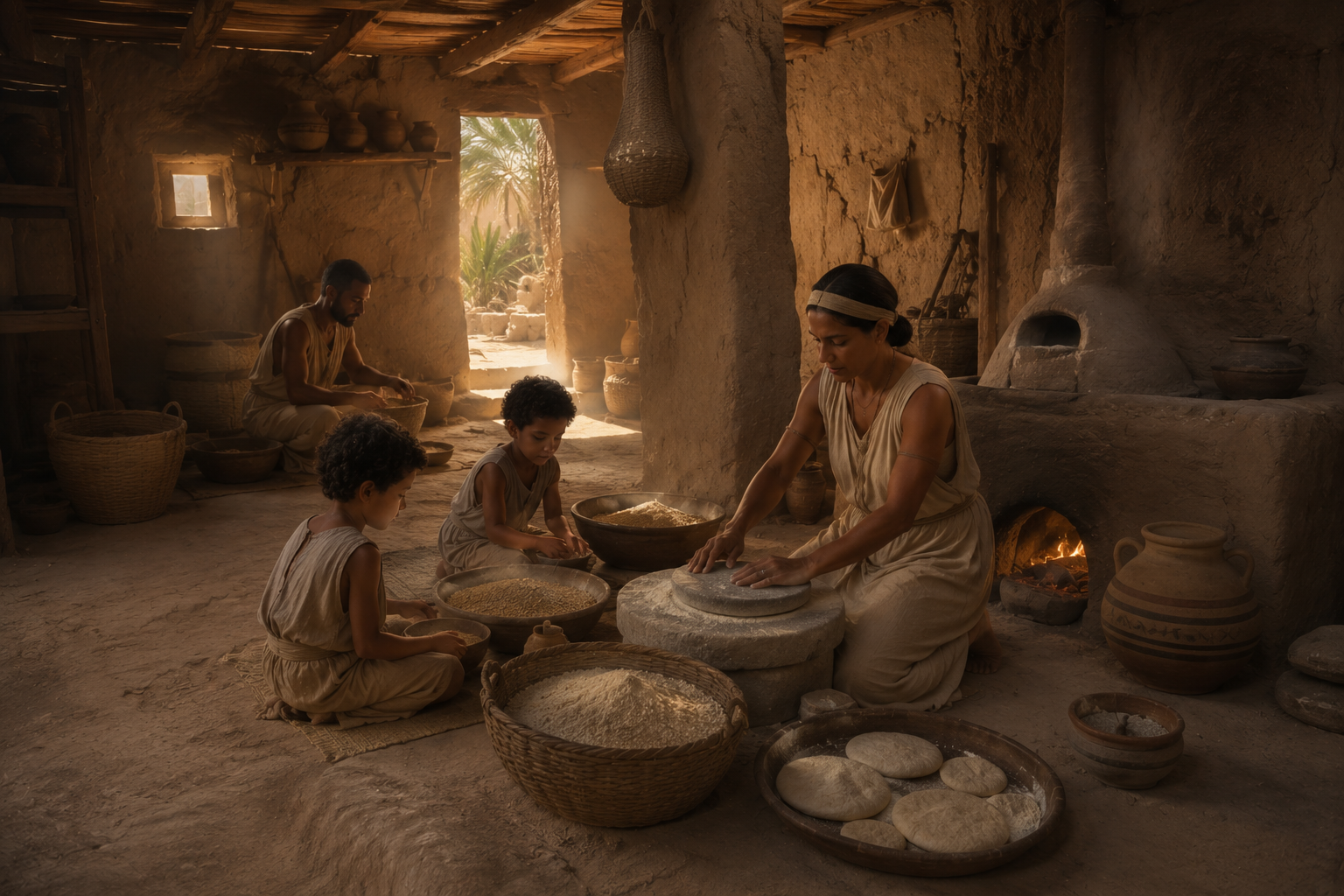
The day often began before the sun appeared above the eastern horizon. In a modest mud-brick home near the Nile, the first sounds were not royal trumpets or temple chants. They were the grinding of grain, the movement of clay jars, and the crackling of a fire being brought back to life.
For many Egyptian women, bread preparation started long before breakfast. Grain had to be processed, flour had to be prepared, and dough needed attention before it could become food. The smell of baking bread would eventually fill the home, but hours of labor came first.
Children woke to these familiar routines. Men prepared for work in fields, workshops, or construction sites. Animals needed feeding. Water had to be carried. The household was already active while much of the village still rested in darkness.
Food was not merely something consumed. It was something earned through effort. Every loaf represented countless steps involving farming, harvesting, transport, storage, grinding, mixing, and baking. Modern supermarkets separate consumers from production. Ancient Egyptians lived much closer to every stage of the process.
Because of this, bread held a status that is difficult for many modern readers to appreciate. It was not simply a side dish. It was the center of the meal and often the center of daily survival.
The Food That Built a Civilization
When people think about what built ancient Egypt, they often point toward engineering, religion, or royal authority. Yet none of these could exist without a stable food supply. Every stone moved, every temple built, and every administrative office maintained depended on agriculture.
The Nile Valley provided the foundation for that success. Each year, floodwaters deposited fertile soil across fields. Farmers learned to work with these cycles, transforming a narrow green corridor into one of the most productive agricultural regions of the ancient world.
Food was not merely nourishment. It was economic power. Grain functioned as wealth. It could be stored, distributed, traded, and used as payment. Entire state projects depended on the ability to collect and redistribute agricultural resources.
Workers constructing royal tombs received food rations. Temple staff were supported through agricultural production. Officials recorded harvest yields carefully because food was directly connected to stability. A successful harvest meant prosperity. A failed harvest could create hardship throughout society.
In many ways, ancient Egypt was built not from stone but from grain.
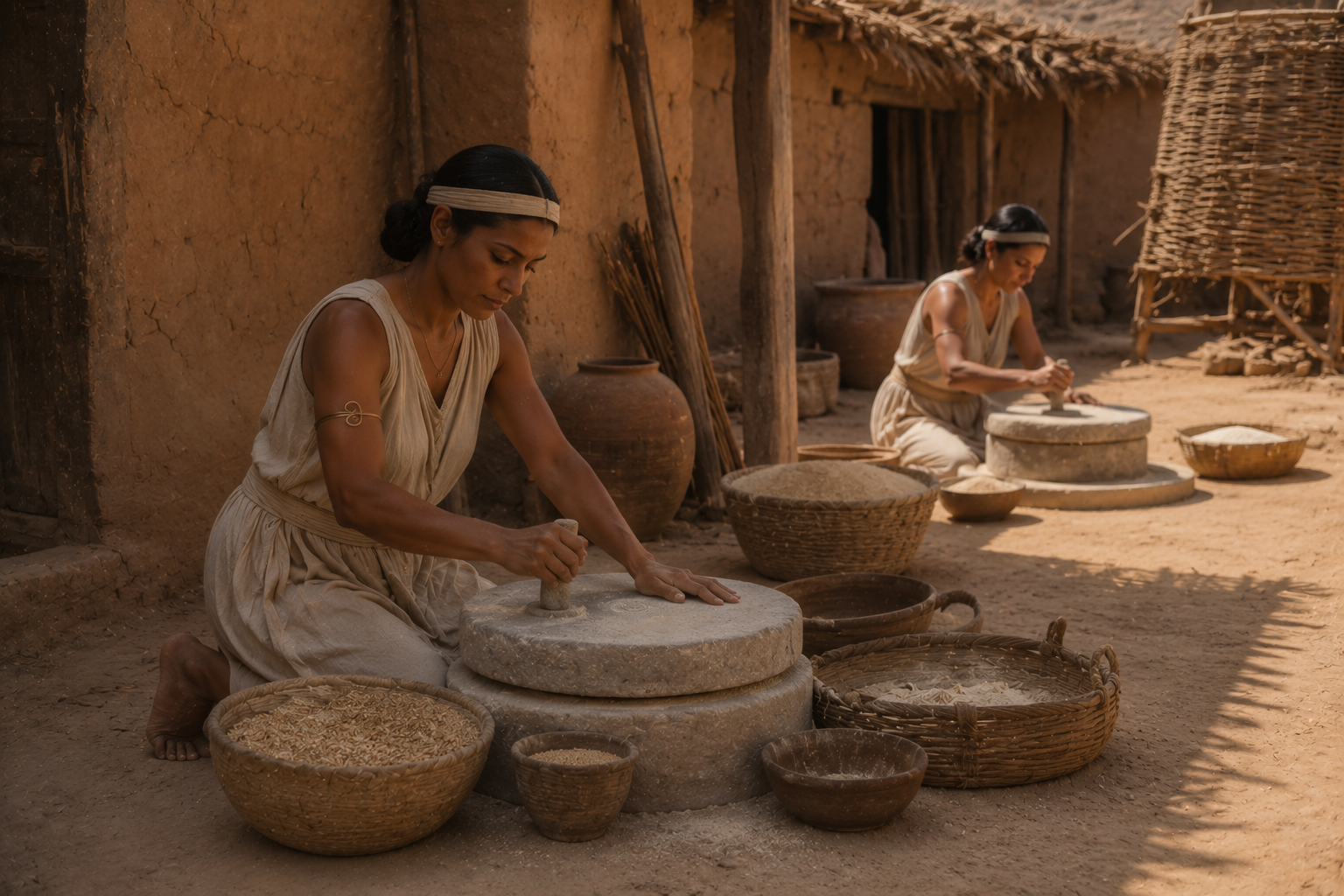
The image above represents one of the least glamorous but most essential activities in Egyptian life. Grinding grain demanded physical effort every day. Archaeologists have even identified wear patterns and skeletal changes in some ancient populations that reflect the repetitive nature of this work.
When we admire the achievements of ancient Egypt, we should remember that behind every achievement stood people performing tasks like these, often without recognition.
Why Bread Was More Valuable Than Meat
Modern audiences often assume meat was the centerpiece of ancient meals. In reality, for many ordinary Egyptians, meat was far less common than bread. Bread appeared daily. Meat often did not.
This difference reflected economics rather than preference. Livestock represented wealth. Animals provided labor, milk, breeding potential, and long-term value. Slaughtering them regularly was not practical for most households.
Bread, by contrast, could be produced on a large scale. Grain harvests supplied communities with a reliable source of calories and energy. Different forms of bread existed, ranging from simple loaves to more elaborate varieties prepared for wealthier households and religious offerings.
Records show that bread was frequently included in worker payments and rations. In some contexts, bread effectively functioned as currency. This practical importance elevated it far beyond the role of a typical food item.
Even today, many cultures use bread as a symbol of sustenance and survival. In ancient Egypt, that symbolism reflected everyday reality.
The Labor Hidden Inside Every Loaf
A loaf of bread represented far more work than most people realize. Farmers planted grain months earlier. Harvesters cut stalks beneath the Egyptian sun. Workers transported grain to storage facilities. Families protected supplies from moisture, pests, and spoilage.
Once grain reached the household, another stage began. Grinding stones reduced kernels into flour. The flour was mixed into dough. Ovens had to be prepared. Fuel had to be gathered. Only after all these steps could bread finally be baked.
This process repeated constantly throughout Egyptian society. It linked the farmer in the field to the baker in the village and the family gathered around a meal. Food production was not an isolated industry. It was woven into daily life.
Because food required so much effort, waste carried serious consequences. Every basket of grain represented labor. Every loaf represented time. Every harvest represented months of planning and work.
Understanding ancient Egyptian food means understanding labor. The two cannot be separated.
Fields Beside the Nile
No discussion of Egyptian food can ignore the Nile. The river transformed a desert landscape into an agricultural powerhouse. Without it, the civilization we know as ancient Egypt could never have emerged.
Farmers carefully observed seasonal changes. They depended on floodwaters to renew soil fertility and support crops. Agriculture was not random. It required knowledge accumulated over generations.
Fields stretched across fertile areas beside the river. Wheat and barley dominated agricultural production, forming the basis for bread and beer. Vegetables and fruits supplemented these staples, creating a diverse food system capable of supporting millions of people.
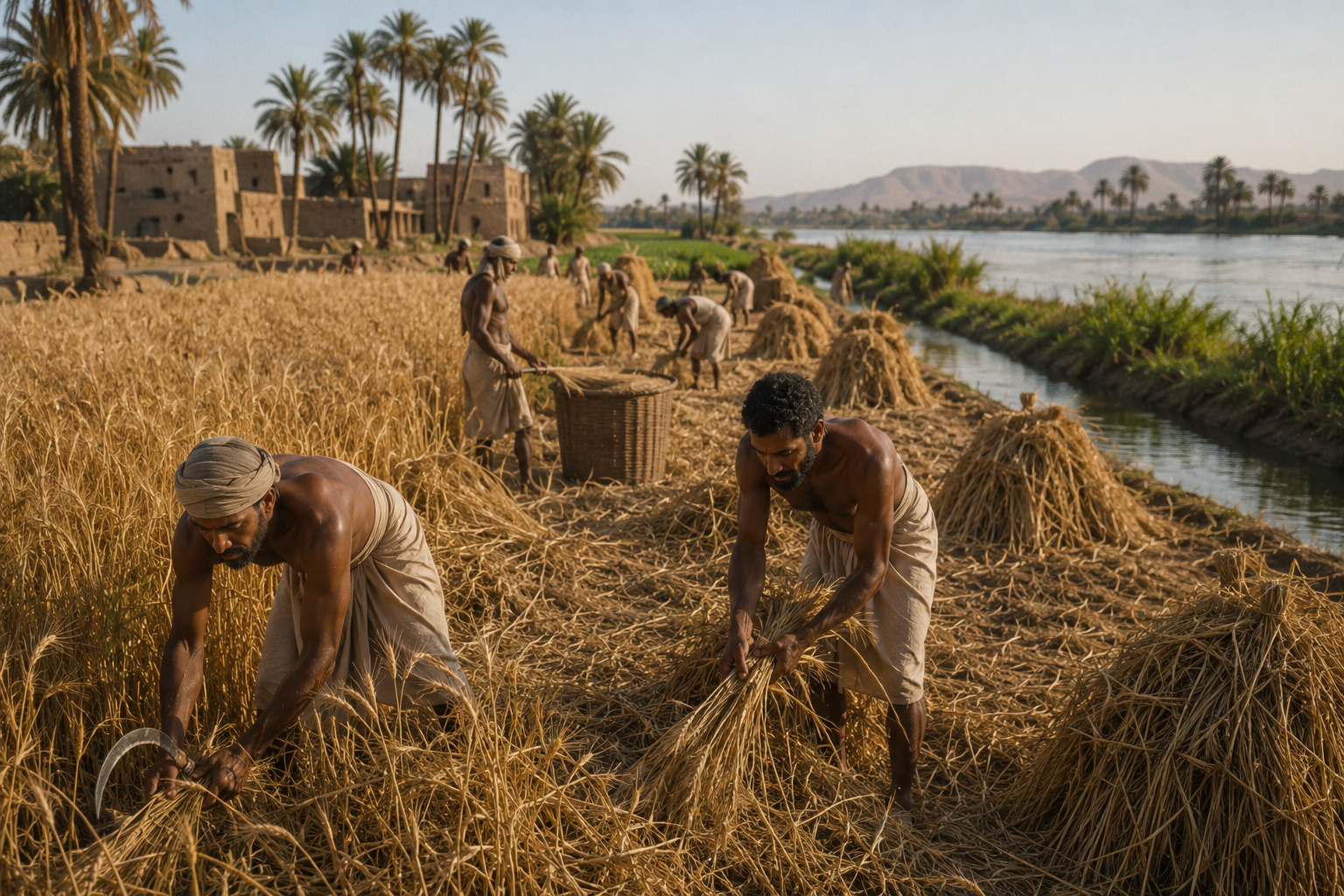
The harvest season was especially important. It represented the moment when months of effort produced visible results. Successful harvests brought security. Poor harvests created anxiety. The relationship between Egyptians and the Nile was therefore practical, emotional, and spiritual all at once.
For ordinary people, the river was not simply a beautiful landscape. It was the source of food, wealth, transportation, and survival.
Beer: Egypt’s Everyday Drink
To modern readers, the phrase “bread and beer” may sound unusual, but in ancient Egypt the two were inseparable. Beer was not treated as a luxury beverage reserved for celebrations. It was part of daily life and, for many people, a regular source of nutrition.
Ancient Egyptian beer was very different from the beverages found in modern bars and restaurants. It was thicker, less filtered, and often contained nutrients derived from grain. In many cases, it functioned almost like a liquid food. Workers received beer as part of their rations, households produced it regularly, and it appeared in both everyday meals and religious offerings.
The production process began with grain, much like bread. Barley and emmer wheat played major roles in brewing. The close relationship between baking and brewing explains why these two foods appear together so often in archaeological evidence.
For laborers working under the Egyptian sun, beer offered hydration, calories, and familiarity. It was consumed by rich and poor alike, although quality and ingredients varied depending on status and location.
Its importance can hardly be overstated. If bread was the solid foundation of Egyptian life, beer was its liquid companion.
Fish From the River
The Nile provided more than fertile soil. It also provided food directly through its waters. Fish became an important supplement to the Egyptian diet, especially for communities living near the river.
Fishing was practiced using nets, hooks, traps, and spears. Tomb scenes frequently depict fishermen at work, offering valuable insights into methods used thousands of years ago. These images are not merely artistic decorations. They preserve information about daily economic activity.
Different species were available depending on region and season. Some fish were eaten fresh while others could be dried or preserved for later use. Preservation was especially important because reliable food storage increased security during difficult periods.
For ordinary families, fish often represented one of the most accessible sources of animal protein. Unlike cattle or other livestock, fish could be obtained directly from the river without requiring large financial resources.
The Nile fed Egypt not only through agriculture but through fishing communities that worked its waters every day.
Vegetables, Fruits, and Seasonal Foods
Ancient Egyptian food was more varied than many people assume. Although bread and beer dominated the diet, they were rarely consumed alone. Vegetables and fruits added flavor, nutrition, and diversity to daily meals.
Onions were especially important and appear frequently in historical records. Garlic was also widely consumed and valued. Lettuce, beans, lentils, cucumbers, and leeks formed part of the agricultural landscape and contributed to household diets.
Fruit brought sweetness into Egyptian life. Dates were particularly important because they were widely available and could be stored effectively. Figs, grapes, and pomegranates also appeared in different regions and social settings.
Seasonality mattered. Modern supermarkets offer year-round access to produce from around the world, but ancient Egyptians lived much closer to agricultural cycles. What was available depended on harvest schedules, local growing conditions, and successful cultivation.
This close connection between diet and season helped shape the rhythm of life. Food reminded people where they lived, what time of year it was, and how dependent they remained on nature.
What Did Children Eat?
Children generally ate the same core foods consumed by the rest of the household. Bread appeared constantly. Beer, often prepared differently for younger members of the family, also played a role in nutrition. Vegetables, fruits, and fish supplemented the basic diet whenever available.
Meals were family experiences rather than separate events organized by age groups. Children grew up watching food being prepared, stored, and consumed. They learned practical skills by observing adults and eventually participating in household work themselves.
Food also taught responsibility. A child living in ancient Egypt understood that bread did not simply appear on a table. It came from fields, labor, grain, grinding, and baking. Daily life provided constant lessons about the effort required to survive.
Because family life was central to Egyptian society, shared meals strengthened relationships between generations. Food carried emotional as well as nutritional value.
Food for the Wealthy
Not every Egyptian ate the same meals. Social status influenced diet significantly. Wealthier households enjoyed greater variety and more frequent access to luxury foods.
Meat appeared more regularly on elite tables. Beef, poultry, and other animal products were more accessible to families with resources. Wealth also allowed access to larger quantities of fruit, imported goods, better-quality bread, and more elaborate preparations.
Banquets depicted in tomb paintings often show tables filled with food, servants carrying offerings, and guests enjoying rich meals. These scenes provide evidence for elite dining practices, but they should not be mistaken for the everyday experience of most Egyptians.
The majority of the population lived much closer to agricultural reality. Their meals were simpler, but they were also practical, sustainable, and deeply connected to the land.
The contrast between elite and ordinary diets reminds us that ancient Egypt, like all societies, contained significant social differences.
The Evening Meal
As the heat of the day faded and workers returned home, attention shifted back toward the household. Evening meals brought families together after hours spent in fields, workshops, markets, or construction projects.
Bread remained central. Fish, vegetables, and whatever seasonal foods were available often accompanied it. Conversations unfolded around shared meals. Children listened to adults. Stories were exchanged. Plans were made for the following day.
The evening meal was about more than nutrition. It marked the transition from labor to family life. The day’s responsibilities began to slow, and households focused on comfort, rest, and preparation for tomorrow.
Although archaeological evidence rarely captures conversations, it allows us to imagine these moments with surprising clarity. The food remains, household objects, and settlement layouts all point toward lives structured around family routines.
In many ways, these evening gatherings make ancient Egyptians feel familiar. Across thousands of years, the desire to share food with family remains deeply human.
Food and Religion
Food occupied an important place in Egyptian religious thought. Bread and beer appeared frequently as offerings to gods and the dead. They symbolized sustenance, continuity, and care.
Temple rituals involved food offerings, and tomb scenes often depict large quantities of food intended to support individuals in the afterlife. The goal was not simply symbolic decoration. Egyptians believed nourishment remained important beyond death.
The connection between food and religion reveals how closely practical and spiritual life were intertwined. Bread could appear at breakfast and later serve as an offering. The same object moved easily between everyday survival and sacred ritual.
This blending of worlds is one of the defining characteristics of ancient Egyptian civilization. Daily activities often carried deeper meaning without becoming separate from ordinary life.
Food therefore nourished both body and belief.
What Archaeologists Have Discovered
Much of what we know about ancient Egyptian food comes from archaeology. Excavations have uncovered ovens, storage facilities, grain remains, pottery vessels, fishing equipment, and even traces of ancient meals.
Tomb paintings provide visual evidence showing farming, fishing, food preparation, and banquets. Written records offer details about rations, taxes, harvests, and supplies. Together, these sources allow historians to reconstruct ancient diets with remarkable accuracy.
Sites such as workers’ villages have proven especially valuable because they reveal everyday life rather than elite ideals alone. The remains of kitchens, bakeries, and storage areas help bridge the gap between grand historical narratives and ordinary human experiences.
Experimental archaeology has also contributed new insights. Researchers have recreated ancient bread-making techniques, studied brewing methods, and analyzed food remains to better understand how Egyptians prepared and consumed meals.
The result is a picture that feels increasingly human. Ancient Egyptians were not abstract figures from a distant past. They were people who worried about harvests, prepared meals, fed families, and relied on food systems that shaped every aspect of life.
Ancient Egypt was built on more than kings, temples, and monuments. It was built on grain. Behind every pyramid stood farmers working beside the Nile. Behind every royal project stood families grinding flour before sunrise. Behind every generation stood bread, beer, vegetables, fish, and the labor required to produce them. The story of Egyptian food is ultimately the story of survival. It reveals how ordinary people transformed a narrow river valley into one of the most successful civilizations in human history. Their meals may seem simple compared to modern expectations, but those simple foods supported a society that endured for thousands of years. When we look beyond the monuments and into the kitchens, fields, and ovens of ancient Egypt, we discover something equally impressive: the daily lives of the people who made the civilization possible.
Frequently Asked Questions
What was the most common food in ancient Egypt?
Bread was the most common and important food in ancient Egypt. It formed the foundation of the diet for most people and appeared in daily meals, worker rations, and religious offerings.
Did ancient Egyptians eat meat every day?
No. Meat was less common for ordinary Egyptians and was often associated with wealth, special occasions, or religious festivals. Bread, beer, vegetables, and fish were consumed more regularly.
Why was bread so important in ancient Egypt?
Bread provided a reliable source of calories and energy. It was easy to produce on a large scale and became central to both the economy and daily life.
What kind of beer did ancient Egyptians drink?
Ancient Egyptian beer was thicker and more nutritious than most modern beers. It was made from grain and often functioned as both a beverage and a source of food energy.
What fruits and vegetables did ancient Egyptians eat?
Common foods included onions, garlic, beans, lentils, lettuce, dates, figs, grapes, and pomegranates, depending on region and season.
How do archaeologists know what ancient Egyptians ate?
Evidence comes from tomb paintings, written records, food remains, storage facilities, kitchen tools, ovens, and archaeological excavations across Egypt.